TFGBV
“Promoting Women’s Equality and Rights (POWER) in Bangladesh”
Supported by Association for Progressive Communications (APC)
BACKGROUND
VOICE implemented a comprehensive project, Promoting Women’s Equality and Rights (POWER) in Bangladesh, to strengthen the capacity of Bangladeshi civil society in advancing gender equality and preventing Technology-Facilitated Gender-Based Violence (TFGBV). The initiative integrated advocacy, campaigning, and capacity-building to support Women Human Rights Defenders (WHRDs) and female journalists in responding to emerging digital threats.
A core component focused on monitoring and documenting TFGBV incidents, generating evidence to map trends, inform advocacy, and support research and policy reform through a structured database. The project also delivered targeted training workshops on gender-sensitive activism, ethical reporting, and digital safety, equipping participants to address online violence and gendered disinformation effectively while enhancing their own protection.
To drive systemic change, the project convened advocacy engagements with key stakeholders, including WHRDs, civil society actors, and policymakers, to strengthen collaboration and promote responsive legal and policy frameworks. Complementary social media campaigns amplified public awareness, challenged stigma, and positioned GBV as a critical human rights issue.
Through this integrated approach, the project contributed to a more informed, resilient, and coordinated ecosystem, fostering safer digital spaces for women and laying the groundwork for sustained action against TFGBV in Bangladesh.
OBJECTIVE AND ACTIVITIES
Objective: specific objective is to enable Women Human Rights Defenders (WHRDs) including journalists to support the promotion and protection of gender equality, advance women’s rights and prevent GBV, particularly in digital/online platforms known as TFGBV.
Project contribution: The project successfully achieved its objective by delivering the following outcomes through the designated activities detailed below:
Outcome 1: Increased knowledge and awareness of project stakeholders, especially, WHRDs including journalists to advance women’s rights and prevent TFGBV.
Project contribution: The VOICE team conducted systematic monitoring of social media platforms and leading national newspapers to identify and document cases of TFGBV. Through this monitoring process, a total of 15 cases were identified, thoroughly analyzed, and compiled into a case study booklet. This publication aims to provide an in-depth understanding of the nature, patterns, and impact of TFGBV in Bangladesh. Before finalizing the booklet for publication, the documented cases and their analysis were presented to key stakeholders during a dedicated case findings dissemination event on 15 February 2025. This event provided an opportunity for stakeholders, including civil society representatives, journalists, and WHRDs, to review the findings, share insights, and offer feedback. The feedback gathered during the event was carefully reviewed and incorporated into the final version of the booklet to ensure accuracy and comprehensiveness.
The case study booklet is currently in the press for publication and will serve as a vital resource to inform future advocacy efforts, policy recommendations, and capacity-building initiatives aimed at combating TFGBV and fostering a safer digital environment for women and marginalized groups.
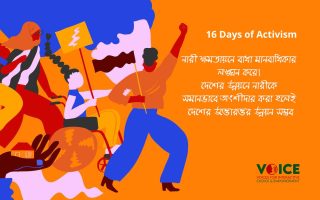
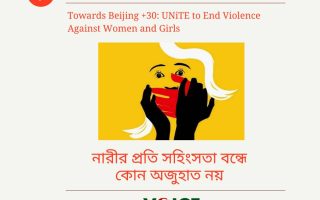
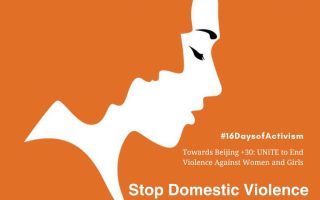
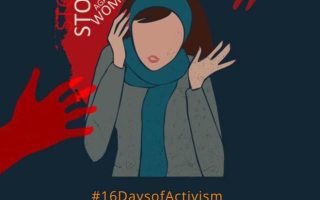
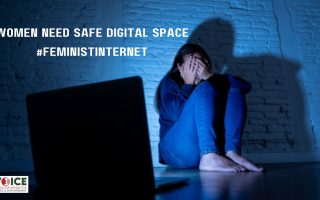
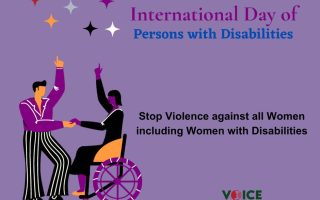
In December 2024, VOICE launched a social media campaign as part of the global 16 Days of Activism against Gender-Based Violence. This campaign aimed to raise awareness and combat TFGBV, with a particular focus on supporting WHRDs and women journalists. Through the creation and dissemination of targeted digital content, the campaign highlighted the unique challenges faced by these groups while navigating their professional duties in the digital world. The content included informative messages in digital poster and posts designed to educate the public, amplify the voices of affected individuals, and push for systemic changes to ensure safer digital spaces.
Outcome 2: Enhanced capacity of WHRDs including journalists to promote gender equality, advance women’s empowerment, create gender sensitive reporting and prevent TFGBV/ harmful practices.
Project contribution: On November 27, 2025, VOICE conducted a specialized workshop titled “Digital Safety and Security: Perspectives of Journalists and Women Human Rights Defenders”. This session focused on empowering participants to navigate the increasing digital threats faced by those working in the media and human rights sectors. Journalists and WHRDs received technical resources, practical tools, and professional guidance to identify online vulnerabilities, implement preventive measures, and respond effectively to digital security challenges.
In addition, on January 25, 2025, VOICE organized a comprehensive training session on gender-sensitive reporting for journalists, including Women Human Rights Defenders (WHRDs). This training aimed to enhance participants’ capacity to report on gender-related issues with accuracy, fairness, and a nuanced understanding of the challenges faced by women and marginalized communities.
Outcome 3: Created gender sensitive attitudes among legal service providers/ law enforcers through dialogues.
Project contribution: VOICE organized advocacy meetings focused on preventing cybercrimes against women, addressing TFGBV, and promoting gender equality. These meetings brought together key stakeholders, including Civil Society Organizations (CSOs) that provide legal assistance and representatives from law enforcement agencies, such as the Crime Investigation Department (CID) of Bangladesh Police.
The first advocacy meeting was held on December 10, 2024, coinciding with International Human Rights Day, emphasizing the urgent need to protect women from online harassment and to uphold their digital rights. The second meeting took place on January 20, 2025, continuing the dialogue on strengthening legal frameworks and collaborative approaches to combat TFGBV. These events provided a critical platform for cross-sector collaboration, fostering dialogue between civil society and law enforcement to identify gaps, share insights, and propose actionable strategies to prevent cybercrimes and ensure a safer digital environment for women.
ACTIVITIES
Advocacy Meeting on Combating Technology-Facilitated Gender-Based Violence
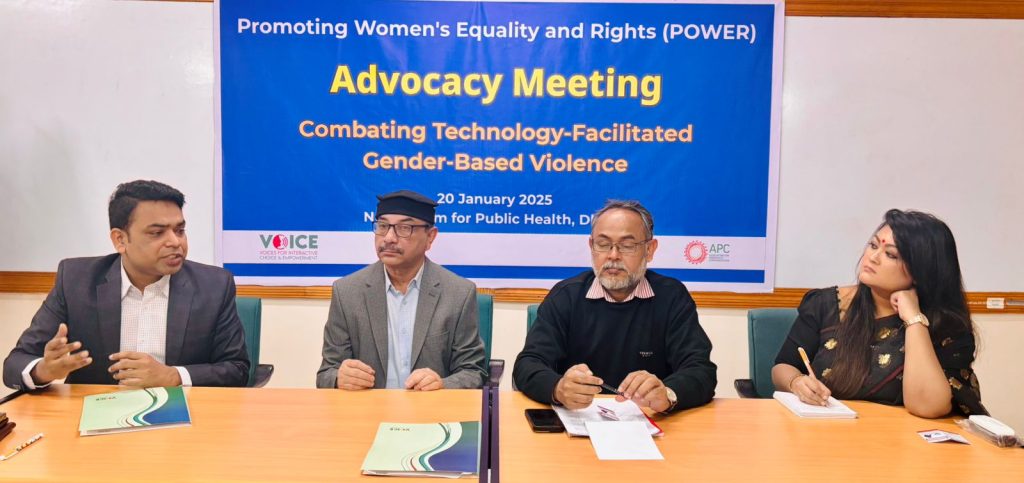
The widespread use of the internet and smartphones has led to significant advancements in women’s education and employment opportunities, along with the creation of new income sources. However, this progress has also brought a troubling downside, with a notable rise in online sexual harassment and violence against women facilitated by internet and mobile technologies.
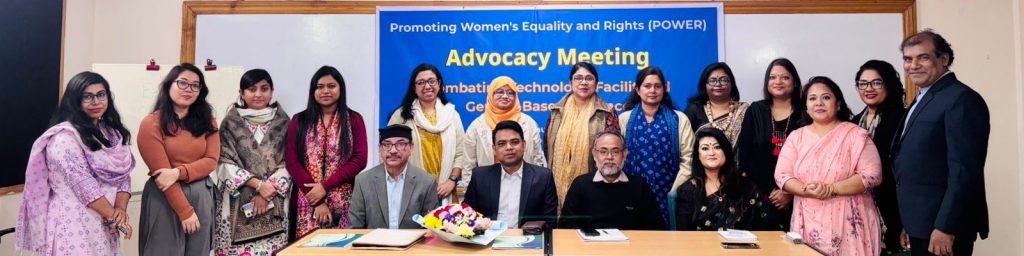
The observation was raised at a workshop titled “Combating Technology-Facilitated Gender-Based Violence” held today in the capital. Research-based advocacy organisation, Voices for Interactive Choice and Empowerment (VOICE) organised the workshop under the “Promoting Women’s Equality and Rights” (POWER) project. Journalists, civil society representatives, human rights activists, academicians, and representatives from organizations providing legal support to victims participated in the workshop.
Speakers at the workshop stressed that social media campaigns, workshops, and awareness-raising activities are essential to inform the public about the various forms of online violence, its impact, and the related laws. They also emphasised the need to prioritise the voices of the victims and increase public awareness about the harmful effects of online sexual violence. Moreover, making necessary support information readily available to the victims is vital.
Mohaiminul Islam, Additional Superintendent of Police, Cyber Investigation and Operation, Criminal Investigation Department of Bangladesh Police, said: “Conducting a case investigation involves multiple steps and barriers, including confiscating the device, sending it for forensic analysis, and contacting platforms like Facebook. Unfortunately, many of the cases we handle are just the tip of the iceberg, as thousands go unreported.”
Supreme Court Advocate Shah Navila Kashphi said: “Although victims file cases, at one point they end up settling with the perpetrator and withdraw the case. So despite having noble intentions, the lawyers struggle to fight for justice.”
Daily Amar Desh Deputy Editor Sultan Mahmud stressed on building capacity of journalists so that they can develop reports on TFGBV aligning with principals of gender sensitivity and human rights.
The meeting was led by Ahmed Swapan Mahmud, Executive Director of VOICE, who underscored the crucial need for women to acquire knowledge and skills to safeguard their online security. “It is vital to prioritize training for female human rights activists and journalists in digital security. The training should cover areas such as protecting personal information, securing online accounts, and identifying and preventing online threats,” he stated. Furthermore, he highlighted the importance of creating platforms where women can openly share their experiences, fostering stronger solidarity and empowering them to resist digital violence.
VOICE Deputy Director Musharrat Mahera pointed out that a lack of awareness, deeply ingrained patriarchal attitudes, and the absence of digital literacy are major barriers to tackling cybercrime against women. “Online violence is often dismissed due to gender biases and patriarchal mindsets, allowing perpetrators to go unpunished and perpetuating the cycle of violence. Additionally, media content frequently lacks gender sensitivity,” she remarked.
Certain cybercrimes disproportionately affect women, including stalking, hate speech, morphing (altering a woman’s photo, creating fake profiles, or sending sexually explicit messages), email hacking, sharing intimate photos, blackmail, threats, impersonation or catfishing, and doxxing (the public release of personal information such as addresses, phone numbers, emails, and family details).
To address the issue of online harassment, the Police Cyber Support for Women programme was launched in 2020. By May 2024, 60,808 women had sought assistance for cybercrimes. Among these victims, 41% had experienced doxxing, 18% had their Facebook accounts hacked, 17% were victims of blackmail, 9% were impersonated, and 8% faced issues related to cyberbullying. Many victims initially feel unsure about what steps to take or where to seek help and are often hesitant to involve family or friends in the early stages.
Trishia Nashtaran, Founder and Co-ordinator of the Meye Network, Sharaban Tohura, Advisor of Nijera Kori, and indigenous rights activist Dalia Chakma spoke among others.
Links of media coverage:
https://www.thedailystar.net/news/bangladesh/news/workshop-stresses-need-combat-technology-facilitated-gender-based-violence-3804106
https://www.tbsnews.net/bangladesh/workshop-held-combating-technology-facilitated-gender-based-violence-1048006
https://www.newagebd.net/post/country/255911/workshop-on-combating-technology-facilitated-gender-based-violence-held
https://en.ittefaq.com.bd/10454/workshop-held-on-combating-technology-facilitated
https://epaper.samakal.com/nogor-edition/2025-01-21/6/6196/detail
https://sangbad.net.bd/news/it/2025/132834/
https://www.bssnews.net/others/239918
https://www.bssnews.net/bangla/news/173468
https://thedailysky.com/workshop-on-combating-technology-facilitated-gender-based-violence-held/
https://www.dailyictnews.com/13866
https://surjodigonto.com/archives/37336
Training Workshop on Gender-Sensitive Reporting for Journalists and Women Human Rights Defenders
Many media outlets fail to prioritise gender policies within their editorial frameworks, leading to biased and insensitive coverage. This neglect results in the perpetuation of harmful gender stereotypes and inadequate representation of marginalised groups. Addressing these gaps requires concerted efforts from both government and media institutions to allocate resources for gender-sensitive reporting and inclusive editorial policies.
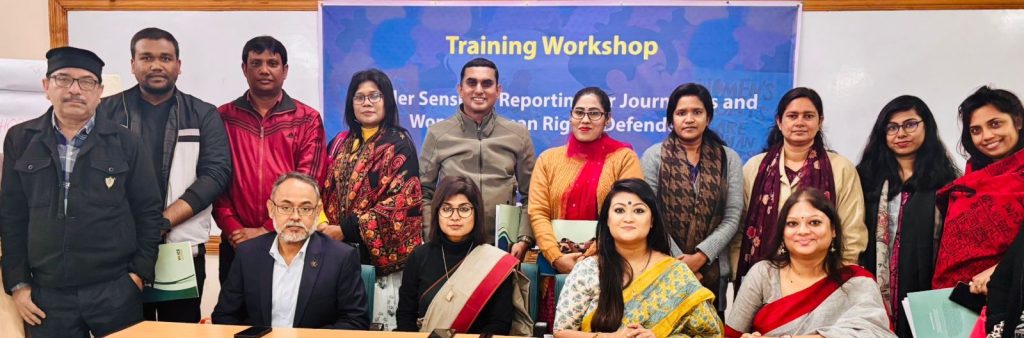
Gender rights activists and media researchers made the call while facilitating a training workshop in Dhaka today. Voices for Interactive Choice and Empowerment (VOICE) organised the day-long “Training Workshop on Gender-Sensitive Reporting for Journalists and Women Human Rights Defenders” as part of the Promoting Women’s Equality and Rights (POWER) in Bangladesh project, funded by APC/SIDA.
At the workshop held in Dhaka, facilitators highlighted the importance of initiatives to strengthen capacity of journalists and human rights defenders, urging the Ministry of Information and Broadcasting, the Press Institute Bangladesh (PIB) and the Directorate for Women Affairs to take immediate initiatives to provide nationwide gender-sensitive reporting training and formulate gender-sensitive policies, particularly for the newsrooms.
Journalists must be sensitised to human rights frameworks, such as the Universal Declaration of Human Rights (UDHR) and national constitutions, to better understand women’s rights, they said.
Asst Prof Afroja Shoma of the Department of Media and Mass Communication at AIUB, rights activist Sheikh Manjur E Alam, Consultant on Rights and Gender Issues Sanaiya Ansari, and Dainik Amar Desh Deputy Editor Sultan Mahmud facilitated the session attended by at least 20 journalists and rights activists.
In his presentation, Sultan Mahmud pointed out that, in Bangladesh, gender-sensitive reporting is often overlooked in both national budgets and editorial policies. Despite the critical role media plays in shaping public perception of gender issues, there is a significant lack of budget allocation for gender-focused reporting in the national budget.
The day long workshop covered several topics aimed at equipping journalists with the tools to report responsibly on gender issues. The workshop began with an exploration of gender concepts e.g. the distinctions between gender and sex, societal gender roles, and the importance of balanced representation, including for non-binary and gender non-conforming individuals. Participants were introduced to human rights and gender rights in following sessions which emphasised universal rights and the specific rights addressing gender equality, focusing on key international conventions such as the UDHR and Convention on the Elimination of All Forms of Discrimination Against Women (CEDAW).
Facilitators discussed how the media has often fallen short in its coverage of gender-related topics. There are numerous examples in which insensitive or sensationalised reporting has contributed to victim-blaming, perpetuated stereotypes, and even re-traumatised individuals who have suffered violence.
They delved into Bangladesh’s legal framework on gender, examining national laws and international principles that safeguard women’s rights and promote gender equality. They discussed the challenges in current reporting models, such as gender bias and lack of awareness. Best practices, including investigative journalism and fair reporting for both men and women, were shared to promote inclusivity in the media. Participants also engaged in practical exercises, including case studies and role-playing scenarios.
Links of media coverage:
https://sangbad.net.bd/news/media/2025/133229/
https://www.daily-sun.com/post/788508
https://www.dhakatimes24.com/2025/01/25/377938
https://en.ittefaq.com.bd/10508
https://www.womeneye24.com/national/news/108927
https://thefinancialexpress.com.bd/national/media-outlets-should-priotise-gender-policies-workshop-told
https://sarabangla.net/news/post-961966/
Dissemination Event on “Recent Incidents of Technology-Facilitated Gender-Based Violence”
With the increasing use of the internet and digital devices, women’s access to education and employment is expanding. New opportunities in various professions, businesses, and income-generating fields are contributing significantly to women’s empowerment. However, a concerning downside is the rise in sexual harassment and violence against women through the use of the internet and mobile networks. Victims of such cyber violence include women political activists, actresses, women poets and writers, women sports personalities, as well as marginalised women.
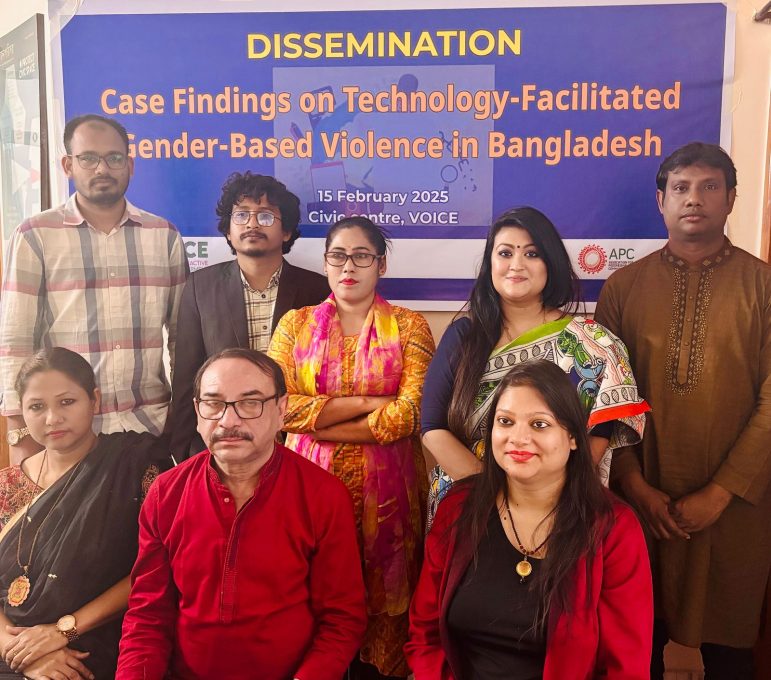
In this context, Voices for Interactive Choice and Empowerment (VOICE), a research-based advocacy organization, organized a dissemination event titled “Case Findings on Technology-Facilitated Gender-Based Violence in Bangladesh.” The event was held on 15 February 2025 (Saturday) at VOICE headquarters in Dhaka; as part of VOICE’s POWER: Promoting Women’s Equality and Rights project, with the presence of journalists.
In her keynote, Promiti Prova Chowdhury, Project Manager at VOICE, demonstrated 13 cases of TFGBV tracked since October 2024. She said: “Women engaged in ideological or professional roles, such as journalists and human rights activists, are more vulnerable to cyberattacks and bullying. Women coordinators of anti-discrimination movements and ordinary women who actively participated in protests have faced severe online harassment, significantly impacting their lives. Consequently, after the change in government, many have refrained from engaging in online political discourse or exercising their freedom of expression.” She further emphasized that online discrimination against women manifests in various ways, including targeted misinformation campaigns, shaming based on personal beliefs, lifestyle, or profession, and the intentional spread of defamatory content.
The discussion revealed that in the three and a half years leading up to May 2024, the Police Cyber Support for Women unit received 60,808 complaints from women seeking redress for cybercrimes. Among these victims, 41% were subjected to doxxing, 18% reported Facebook account hacking, 17% faced blackmail, 9% experienced impersonation, and 8% suffered from cyberbullying. Notably, following the government’s fall in August last year, the highest number of cybercrime complaints against women were filed in September and October with the Police Cyber Support for Women unit.
Journalists of different newspapers, television channels, and online newspapers took part in the discussion. They suggested doing investigative stories on TFGBV in bulk to raise awareness on the matter. Moreover, they stressed the importance of training programmes on gender sensitivity for those working at the cyber support cell of police to serve the victims of TFGBV.
Speakers at the event highlighted that women are increasingly becoming primary targets of cybercriminals. Various forms of online violence include misinformation campaigns, hate speech, AI-generated explicit images and videos, cyberstalking, and threats—tactics used to humiliate and harass women in digital spaces. Other violations include cyberstalking, morphing (manipulating women’s photos, creating fake profiles, sending sexually explicit messages), financial fraud, email hacking, impersonation or catfishing (deceiving victims through false identities), and doxxing (leaking personal information like addresses, phone numbers, and family details online). Due to the fear of social stigma and legal complexities, many victims refrain from seeking help from law enforcement agencies. Most survivors initially struggle to understand how to respond or where to seek redress, often hesitating to inform family members or close acquaintances. Those who do file cases frequently face obstacles in obtaining justice, leading some to extreme actions such as suicide.
The event was chaired by Ahmed Swapan Mahmud, Executive Director of VOICE, who stated, “Raising public awareness is a crucial tool in combating technology-facilitated sexual harassment. Awareness campaigns, workshops, and outreach activities on social media should focus on educating people about different forms of online violence, its impacts, and relevant laws. It is essential to amplify victims’ voices and raise awareness about the harmful effects of online sexual violence. Additionally, making necessary support and information easily accessible for victims is vital.”
Links of media coverage:
https://unb.com.bd/category/Bangladesh/voice-organises-dissemination-event-on-study-into-recent-incidents-of-technology-facilitated-gender-based-violence/153596
https://bangla.bdnews24.com/bangladesh/c05ac217326d
https://www.tbsnews.net/economy/corporates/voice-holds-dissemination-event-gender-based-voilence-1069876
https://www.bd-pratidin.com/city-news/2025/02/16/1085876
https://www.channel24bd.tv/24pressrelease/article/253213/%E0%A6%86%E0%A6%A6%E0%A6%B0%E0%A7%8D%E0%A6%B6%E0%A6%97%E0%A6%A4-%E0%A6%95%E0%A6%BE%E0%A6%9C%E0%A7%87-%E0%A6%AF%E0%A7%81%E0%A6%95%E0%A7%8D%E0%A6%A4-%E0%A6%A8%E0%A6%BE%E0%A6%B0%E0%A7%80%E0%A6%B0%E0%A6%BE%E0%A6%87-%E0%A6%B8%E0%A6%BE%E0%A6%87%E0%A6%AC%E0%A6%BE%E0%A6%B0-%E0%A6%86%E0%A6%95%E0%A7%8D%E0%A6%B0%E0%A6%AE%E0%A6%A3%E0%A7%87%E0%A6%B0-%E0%A6%AC%E0%A7%87%E0%A6%B6%E0%A6%BF-%E0%A6%B6%E0%A6%BF%E0%A6%95%E0%A6%BE%E0%A6%B0
https://www.banglatribune.com/others/886040/%E0%A6%AC%E0%A6%B0%E0%A7%8D%E0%A6%A4%E0%A6%AE%E0%A6%BE%E0%A6%A8%E0%A7%87-%E0%A6%B8%E0%A6%BE%E0%A6%87%E0%A6%AC%E0%A6%BE%E0%A6%B0-%E0%A6%85%E0%A6%AA%E0%A6%B0%E0%A6%BE%E0%A6%A7%E0%A7%80%E0%A6%A6%E0%A7%87%E0%A6%B0-%E0%A6%85%E0%A6%A8%E0%A7%8D%E0%A6%AF%E0%A6%A4%E0%A6%AE-%E0%A6%9F%E0%A6%BE%E0%A6%B0%E0%A7%8D%E0%A6%97%E0%A7%87%E0%A6%9F-%E2%80%98%E0%A6%A8%E0%A6%BE%E0%A6%B0%E0%A7%80%E2%80%99
https://www.dhakapost.com/national/344242
https://en.ittefaq.com.bd/10759/
https://www.kholakagojbd.com/news/8044
https://www.dhakatimes24.com/2025/02/15/379545
https://www.dailyictnews.com/13986
https://sangbad.net.bd/news/it/2025/135431/
‘‘Digital Safety and Security: Perspective of Journalists and Women human Rights Defenders’’
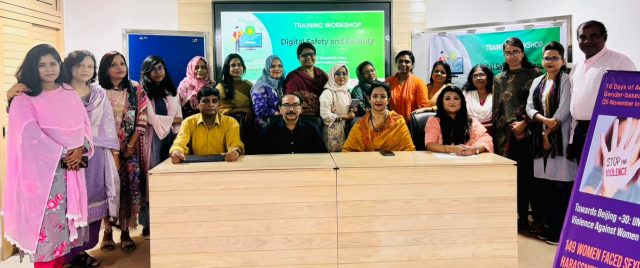
VOICE, a leading right-based organization focused on research and advocacy, recently hosted a training workshop titled “Digital Safety and Security: Perspectives of Journalists and Women Human Rights Defenders” on 27 November 2024. Participants, including journalists and women human rights defenders, gained access to technical resources, practical guidance, and professional insights aimed at addressing digital safety threats, identifying online vulnerabilities, and implementing preventive measures. The interactive nature of the workshop enhanced participants’ confidence in navigating the digital landscape, equipping them with the knowledge and tools to safeguard themselves and their information sources effectively.
VOICE has long been working with journalists and women human rights defenders and has expressed deep concern over the significant challenges they face in carrying out their professional responsibilities. Particular attention has been drawn to the safety of women in these fields, who are frequently targeted with online harassment, including cyberbullying, lawsuits, arrests, and detentions, especially during periods of authoritarian governance.
Ashraful Haque, a renowned digital safety and security specialist from EngageMedia, emphasized the importance of using encrypted communication tools for emails and messaging. He highlighted that these tools are crucial for journalists and rights activists to safeguard their sources and sensitive communications from hacking and surveillance. Additionally, he recommended using a VPN to conceal online activity, preventing malicious entities from tracking or intercepting data.
Rezwan Islam, a consultant from EngageMedia, stated, “The rapid growth of online platforms has made it easier for perpetrators to target journalists and women human rights defenders with various forms of harassment, including threats, doxxing, trolling, and misinformation campaigns.”
Ahmed Swapan Mahmud, Executive Director of VOICE, emphasized that, “In today’s digital age, ensuring digital safety and security is crucial, particularly for journalists and women human rights defenders. Their work often involves sensitive investigations, explorations, and communications, making them vulnerable to threats such as surveillance, exploitation, and hacking.”
Musharrat Mahera, Deputy Director of VOICE, outlined the workshop’s objectives during her presentation. She highlighted that “Women journalists and defenders face a multitude of challenges, which have intensified with the rise of social media and online communication, often discouraging them from pursuing critical reporting or voicing their opinions on significant issues.”
Media Coverage
Advocacy meeting on ‘‘Women Rights is Human Rights: Navigating Technology-Facilitated Gender-Based Violence in the Digital Era’’
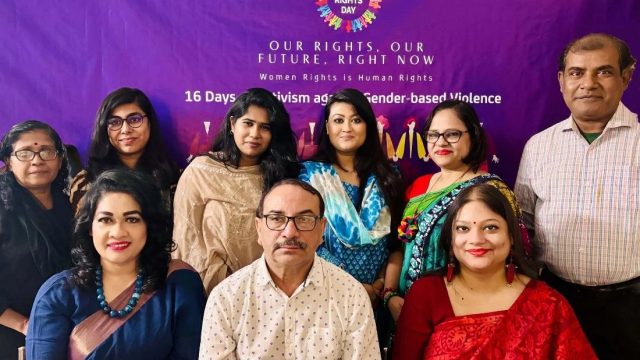
Digital literacy and gender justice must be an integral part of elementary level education in order to combat Technology-Facilitated Gender-Based Violence (TFGBV). This observation came from speakers at an advocacy meeting organized to mark Human Rights Day 2024.
VOICE, a leading rights-based organization focused on research and advocacy, has hosted the meeting titled ‘‘Women Rights is Human Rights: Navigating Technology-Facilitated Gender-Based Violence (TFGBV)’’ to celebrate Human Rights Day 2024 on occasion of 76th anniversary of the Universal Declaration of Human Rights. The meeting took place at VOICE’s Civic Center, Shymoli on 10 December 2024 and was attended by human rights defenders, civil society members, media professionals, activists, women and youth.
VOICE has been working in line with the cornerstones of the Universal Declaration of Human Rights to infuse societies with equality, fundamental freedom, and justice while emphasizing that women’s rights are human rights over the last twenty-three years. Speakers at the event expressed their concerns about women’s rights, an integral component of human rights, which is frequently undermined through various forms of abuse, including targeted attacks, gender misinformation and disinformation, threats, cyber bullying, sextortion, and the exploitative misuse of technology.
Ahmed Swapan Mahmud, Executive Director of VOICE, presided over the meeting and shared the organization’s concern about human rights situation in Bangladesh especially in the present era of digital advances. He stated that, “technology-facilitated gender-based violence is escalating with online platforms increasingly being weaponized to target women, girls and gender-diverse communities”. He also elaborated, this form of digital oppression infiltrates homes, workplaces, and educational institutions, crossing all boundaries and geographical limitations. It is evident through cyber bullying, online harassment, stalking, and the non-consensual sharing of private information and images. The anonymity and global reach of digital platforms enhance the problem, leaving victims vulnerable and perpetrators motivated to commit more such crimes.
Speakers stressed that women face systemic discrimination and pervasive patriarchy across all levels of society. Simultaneously, the country has witnessed a rapid expansion in information and communication technology, infrastructure, and usage over the past decade. However, this technological advancement has posed significant challenges for women, who often struggle to navigate the digital landscape. A 2022 study by ActionAid Bangladesh revealed that, among different type of online violences, women experience hateful and offensive sexual comments the most (about 80%). This year, flagging out social media account hacking as an emerging cybercrime in Bangladesh, Cyber Crime Awareness Foundation (CICAF) has shown that, about 60% of the victims are women.
Speakers called for collective action to combat TFGBV, emphasizing that protecting women’s rights is a fundamental step toward ensuring equality, dignity, and freedom for all. The call for action highlighted the duties of the government to address TFGBV through awareness campaigns focused on safeguarding, improved digital literacy, robust law enforcement mechanism, women’s empowerment initiatives, professional capacity building training, and targeted education for both general public and vulnerable groups.
Media Coverage
https://www.dhakatribune.com/business/367823/voice-observes-international-human-rights-day-2024
https://www.newagebd.net/post/country/252508/voice-observes-international-human-rights-day-2024
16 DAYS OF ACTIVISM